

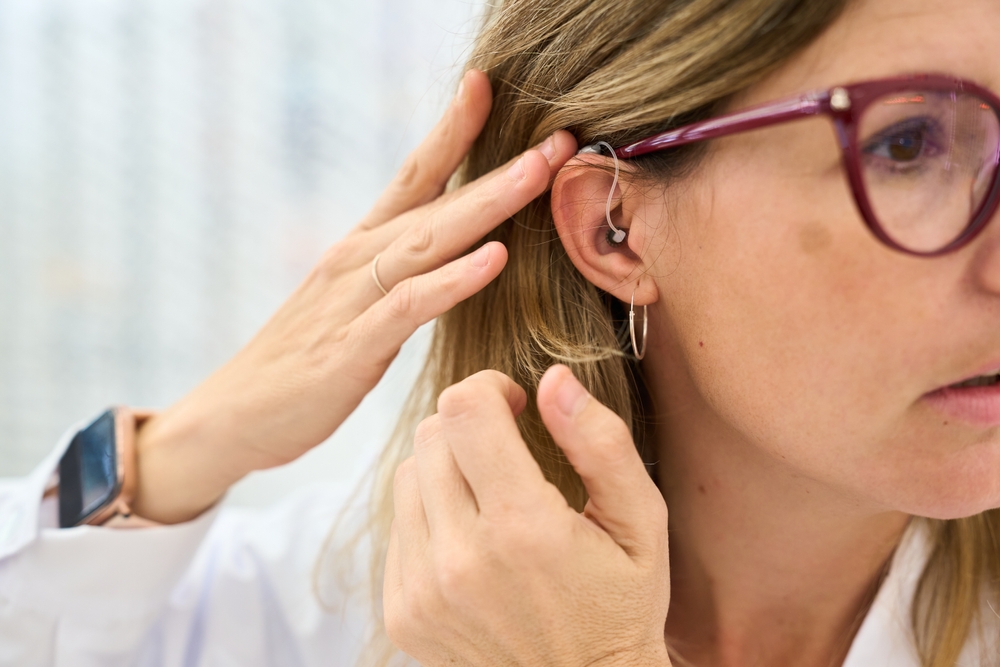
A primary reason individuals put off addressing auditory deficits is the assumption that assistive devices will be unsightly or awkward to wear. Such reluctance is perfectly natural when you consider past technology! Regrettably, some people even experienced social alienation because acquaintances falsely assumed that wearing a visible aid signaled a complete inability to comprehend spoken dialogue.
This obsolete perception remains deeply embedded in the public consciousness, creating a massive barrier to proactive treatment. But the reality is that today’s modern hearing aids look and feel very different from what you might expect. Ongoing innovations in cosmetic engineering mean today’s options are ultra-small, seamlessly comfortable, and beautifully hidden from public view.
If you’ve been putting off treatment because of how hearing aids used to look, it might be time to take a fresh look at what’s available today!
Dispelling the Myth: Modern Devices Have Transcended Older Styles
When asked to visualize a hearing instrument, the average person still envisions an awkward, highly conspicuous piece of hardware visible from yards away. If that’s the case, you’re thinking about hearing aids circa the 1980s and ’90s.
In the intervening decades, the entire field of otolaryngology and acoustic engineering has undergone a massive paradigm shift. Exponential leaps in digital circuit shrinking, industrial design, and audio computing have totally redefined contemporary hardware. They’re smaller, sleeker, and designed to blend in (or disappear entirely).
A multitude of current designs fit entirely inside the physical ear canal, ensuring they remain hidden from view during normal social encounters. Different configurations sit comfortably behind the ear but feature such a low profile and featherweight build that observers naturally miss them.
A Taxonomy of Modern Styles: From Totally Hidden to Ultra-Streamlined
For those investigating what these advanced acoustic tools look like in real life, consider this straightforward guide:
Deep Canal Solutions: Invisible-in-Canal (IIC)
These are as discreet as it gets. IIC devices sit completely inside the ear canal and are custom-made to fit your ear. Spoken interactions at arm’s length occur without anyone realizing a medical device is present. They remain an exceptionally sought-after solution for patients with mild-to-moderate deficits who refuse to compromise on cosmetic privacy.
The Versatile Receiver-in-Canal (RIC) / Receiver-in-the-Ear (RITE) Style
This is the most common style today. A tiny component sits behind the ear, connected by a nearly invisible wire to a small speaker in the ear canal. To onlookers, this streamlined design closely mirrors fashionable consumer electronics or sports earbuds. Surrounding individuals will remain completely unaware of the technology unless they actively look for it.
Traditional Behind-the-Ear (BTE) Reimagined
This style positions the main component body post-auricularly, offering a slightly larger footprint that remains beautifully sculpted and sleek. They’re often recommended for more significant hearing loss and offer excellent performance without the bulky appearance people expect.
The key takeaway: Today’s discreet hearing aids are designed to fit your life, not announce themselves.
Modern Hearing Aids: Looking Better and Doing a Lot More
The recent metamorphosis of hearing instruments extends far beyond mere cosmetic downsizing. In the current era, these processors operate like sophisticated wearable computers rather than simple analog sound amplifiers. Most current systems boast universal wireless syncing, channeling smartphone calls, high-definition music, and television broadcasts directly to your internal receivers.
Most come with smartphone apps, so you can adjust volume or switch settings without ever touching the device. Should you transition into a loud social environment, you can instantly recalibrate your directional microphones via your phone screen. Furthermore, lithium-ion rechargeable cells have entirely eliminated the need to fiddle with microscopic, short-lived zinc-air batteries. You merely dock the devices on a nightstand inductive charger, exactly like replenishing your mobile phone.
Overcoming the Psychological Barriers to Better Hearing
Even with this encouraging information, taking the initial step toward treatment can induce anxiety. Initiating an auditory health journey can feel emotionally taxing because it requires acknowledging that our physical baseline has shifted over time. This realization can occasionally induce feelings of helplessness, leaving patients feeling detached from their own physical autonomy.
But here’s a different way to look at it: Hearing aids aren’t a sign that something has gone wrong. They’re simply a sign of change, which happens to us all. Investing in your hearing shows that you are actively deploying advanced resources to support your systemic well-being and social connection.
Visualize the freedom of utilizing a completely covert acoustic system that restores your ability to track jokes, engage in crowded restaurants, and capture every nuance of the activities you love. Talk about empowering!
See For Yourself What Today’s Hearing Aids Look Like
The most effective method to permanently banish an obsolete stereotype is to personally examine current clinical options. We invite you to come in, ask questions, and explore your options with no pressure and no commitment necessary. Consider it a chance to see and feel how different modern hearing aids really are.
Almost every visitor walks out completely shocked by how weightless, ergonomic, and cosmetically invisible these tools are in practice! Call our office to schedule your visit online today.