

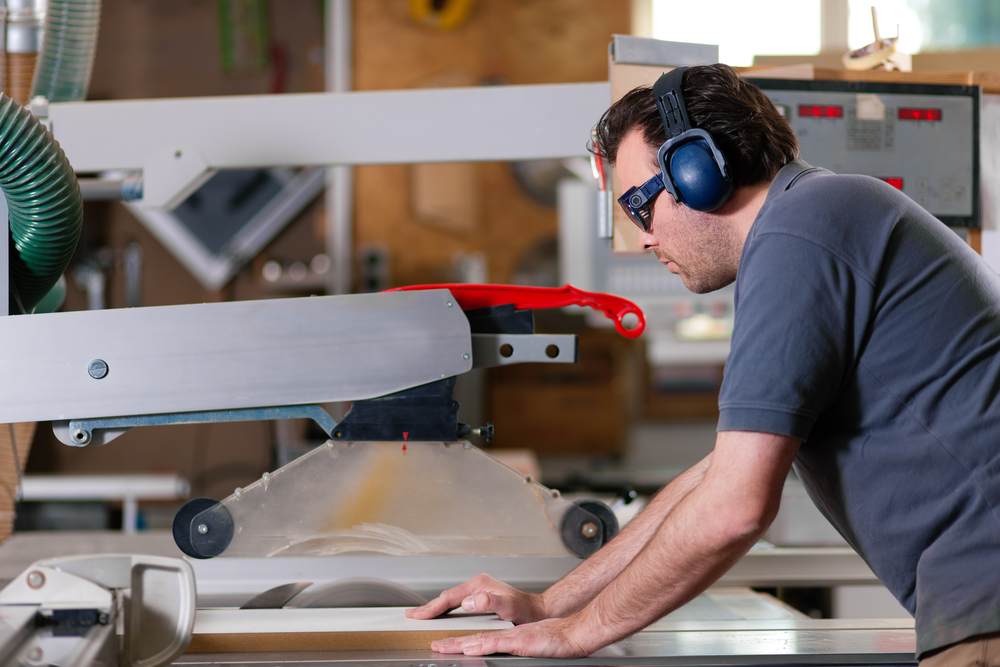
Prolonged exposure to sound can take a serious toll on your hearing health, especially in settings where sound levels exceed safe thresholds. It is critical to shield your ears, not only to prevent hearing damage, but also to help you concentrate in loud environments. So, how do you find the best level of hearing protection for your situation?
How noise levels impact your hearing
When assessing the effect of noise, the duration of exposure is as important as the sound’s loudness. Decibels are the crucial unit for measuring sound levels and expressing sound volume. Once noise gets to a level of 85 dB or above, it creates a danger to your hearing, mainly if the exposure is lengthy.
As a frame of context, 85 dB is about the same volume as the sound of city traffic perceived from within a car. An eight-hour period of continuous exposure can lead to damage your hearing, even if the sound level doesn’t seem overly loud. The safe duration for exposure lessens proportionally as the noise level increases:
- Damage can result with up to 4 hours of exposure at 90 dB (Lawnmower).
- Keep your exposure to 100 dB (Power tools) to less than 1 hour.
- At 110 dB (Leaf blower), damage can result in as little as 15 minutes of exposure.
- 120 dB (Rock concert): Any exposure at this level can damage your hearing.
- Immediate pain and damage are possible at 140 dB (Jet engine).
Identifying unsafe noise levels
It is vital to use hearing protection if your regular exposure is to noise levels of 85 dB. Such protection is chiefly critical in industrial settings, including plants and construction sites, or any places where excessive noise is produced by tools, gear, or engines.
You can encounter unsafe noise levels even in recreational activities—such as attending concerts, utilizing leaf blowers, or shooting sports—making hearing protection smart outside of a job setting.
Choosing protection based on Noise Reduction Ratings (NRR)
The performance of hearing protection is measured by its Noise Reduction Rating (NRR). Measured in dB, this figure indicates the degree of sound blockage the protector offers. The larger the NRR, the superior the protection against sound. An illustration is a pair of earplugs with a 30 dB NRR, which could lower an 85 dB sound to 55 dB, thereby maintaining you securely within the parameters of safe exposure.
When making your decision, take into account the specific noise volume you are facing and verify that the protection reduces the sound below the 85 dB threshold.
Why comfort is necessary for wearing hearing protection all the time
The NRR is clearly important, but comfort is an equally significant component in achieving continuous, long-term use. If the hearing protection is cumbersome or uncomfortable, you are inclined to remove it, which leaves your hearing unprotected against dangerous noise.
The more comfortable the device, the higher the chance you are to use it consistently, which significantly reduces the threat of intermittent exposure. For example, if earmuffs are too heavy or lead to discomfort, you may find yourself removing them occasionally, subjecting your ears to dangerous noise levels.
What are the forms of hearing protection?
Hearing protection comes in several types, each with its advantages and disadvantages:
- Foam Earplugs: These sit inside the ear canal and offer excellent noise reduction. They’re lightweight and disposable but may feel uncomfortable for some users.
- Being reusable and resting just outside the ear canal, Pre-Molded Earplugs are a more sustainable choice and are also easier to insert and remove than foam earplugs.
- Covering the whole ear, Earmuffs are perfect for settings where noise volume changes, as they can be easily removed and replaced. Their drawbacks include potentially feeling warm or heavy over a long period.
The ideal type of protection to choose is determined by your own preference and the needs of the environment you are in. An example is construction workers preferring earmuffs for their easy convenience, while factory workers may select earplugs for a continuous period of wear.
Ensuring consistent use
The protection that is used consistently is, by its very design, the best performing kind. Interrupting the use, even for a brief time, may have lasting consequences for your hearing. It is absolutely necessary to select a solution that optimizes between comfort, protection, and convenience for this purpose.
Securing your auditory health
We are always surrounded by noise, yet choosing the appropriate protective device ensures your ears are protected, enabling you to continue enjoying your acoustic surroundings.
To review the most effective methods for protecting your hearing health and evaluating your risk for noise-related hearing damage, please reach out to us now.